Lesson Plans
Overview
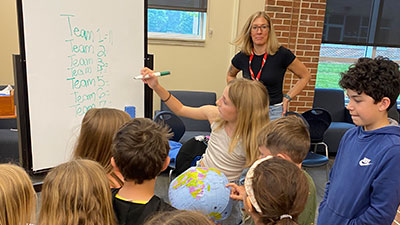
In this 10-lesson unit with a culminating action project, we will investigate the driving question: How can we make a positive impact on our watershed? The goal of this unit is environmental action. As a class, we want to learn about the health of our local waters so that we can do something to make our watershed better!
This unit is designed for ACTION using a Meaningful Watershed Education Experience (MWEE) curricular framework. The MWEE framework includes four essential elements:
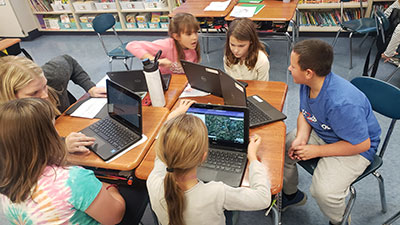
- Issue Definition, where students focus on an environmental question, problem, or issue requiring background research and investigation
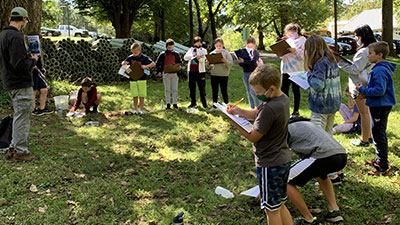
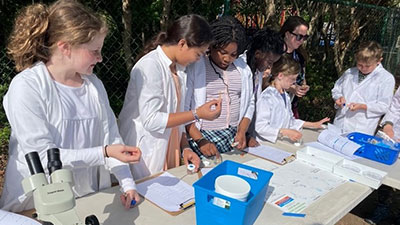
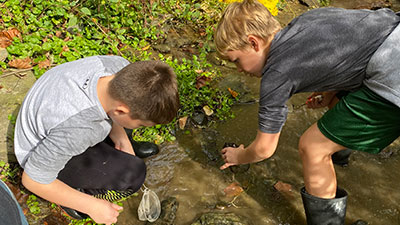
- Outdoor Field Activities, where students participate in multiple outdoor field activities sufficient to collect the data or make observations required for answering the research questions and informing student actions
- Synthesis and Conclusions, where students analyze and evaluate the results of projects and investigations
- Environmental Action Projects, where students participate in an age-appropriate project during which they take action to address environmental issues at the personal or societal level
As you teach this unit, keep the driving question in mind as you help students think about ways they can help our watershed!
Guiding The Shared Waters Storyline
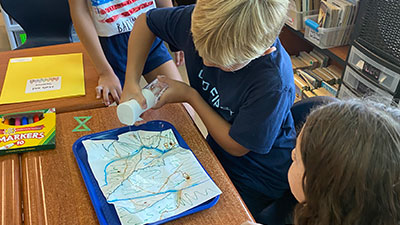
The Shared Waters unit follows a connected storyline in which students investigate how water moves through a watershed, how human activity affects it, and what evidence reveals about the health of their local stream. Each lesson builds on previous discoveries, allowing students to develop their understanding through models, observations, simulations, and investigations.
Throughout Lessons 1–8, create a class anchor chart to document key ideas, vocabulary, questions, maps, observations, and data. Revisit and update the chart as students gather evidence, make connections, and revise their thinking. The chart may be physical or digital; its value comes from the ongoing collection and review of evidence, not its appearance.
The anchor chart should help students explore three questions:
- How does water move through our watershed?
- How do people affect the watershed?
- How healthy is our local stream?
In Lesson 9, students use the collected evidence to identify patterns and develop an explanation about their watershed. In Lesson 10, they apply what they have learned to create an informed action plan. The Shared Waters Anchor Chart Guide provides suggested additions for each lesson.
Usage Statement: Individual teachers are welcome to use the "Shared Waters" curriculum for classroom purposes without seeking permission. However, the use of this curriculum for school professional development or by other professional development providers is prohibited without prior written consent from the authors. Any sale of materials designed and advertised for use with this curriculum is strictly prohibited.